Africa has the resources to thrive. We partner with communities to unlock that abundance.
As the ForAfrika team walks down the corridor toward the garden, she adds a few more signs to our vocabulary. “This is hello,” she says, tapping her head upward and forward. “And this is ‘how are you?’”, she continues, clapping her hands together, spreading them over her chest, and finishing with a double thumb-up.
“Now you’re ready to meet everyone here.”
According to the World Report on Hearing, an estimated 12 million people, around 20% of the population in South Africa live with some degree of hearing loss. Among them, about 600,000 people use South African Sign Language (SASL) as their primary means of communication. Still, nearly three million South Africans with hearing disabilities receive little to no formal support.
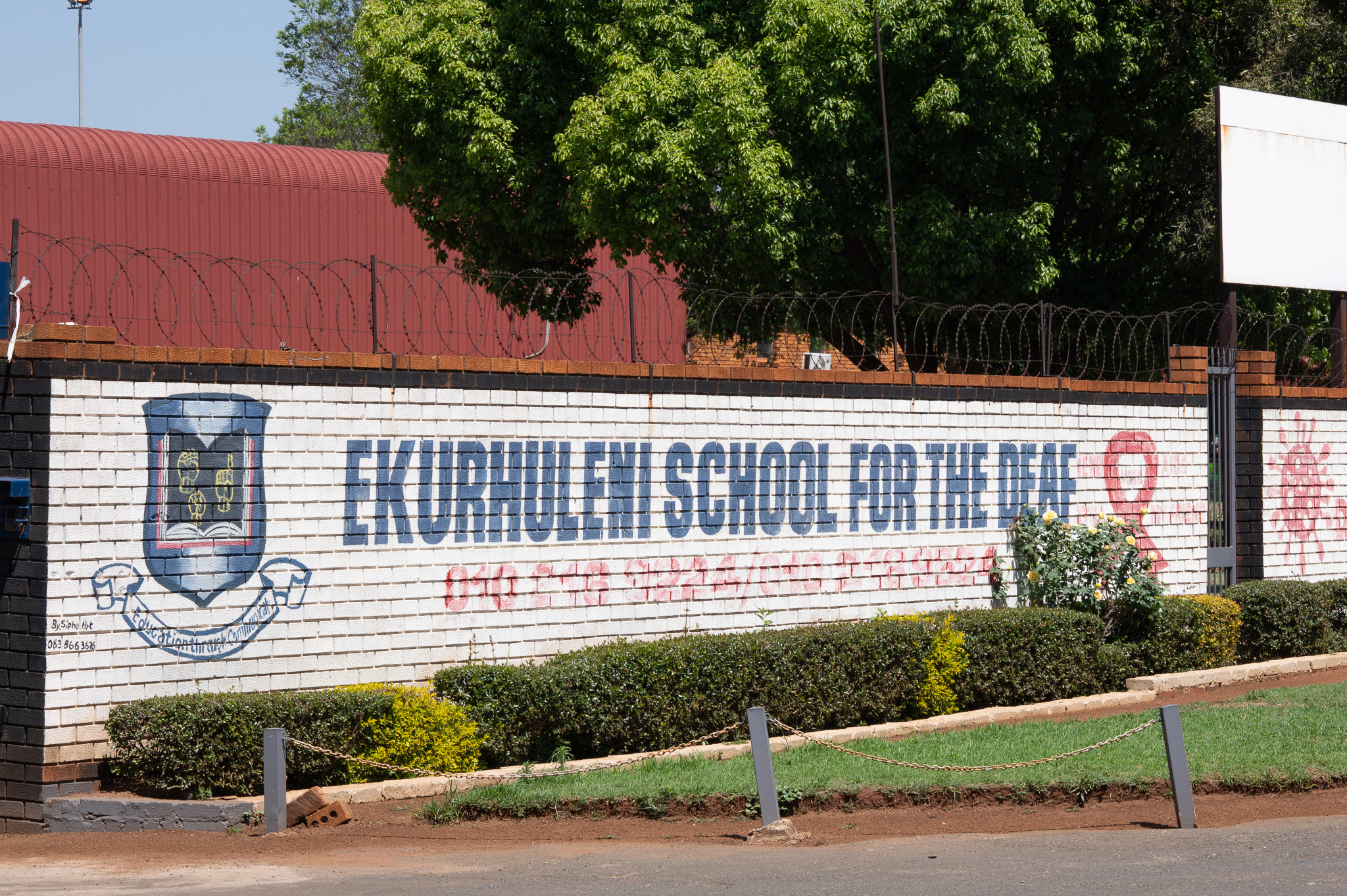
Around the world, hearing impairment is still plagued by stigma. For generations, people with physical and mental disabilities have faced exclusion and systemic barriers such as limited access to education, economic hardship, and deep social isolation. Yet at Ekurhuleni School, this is not the case.
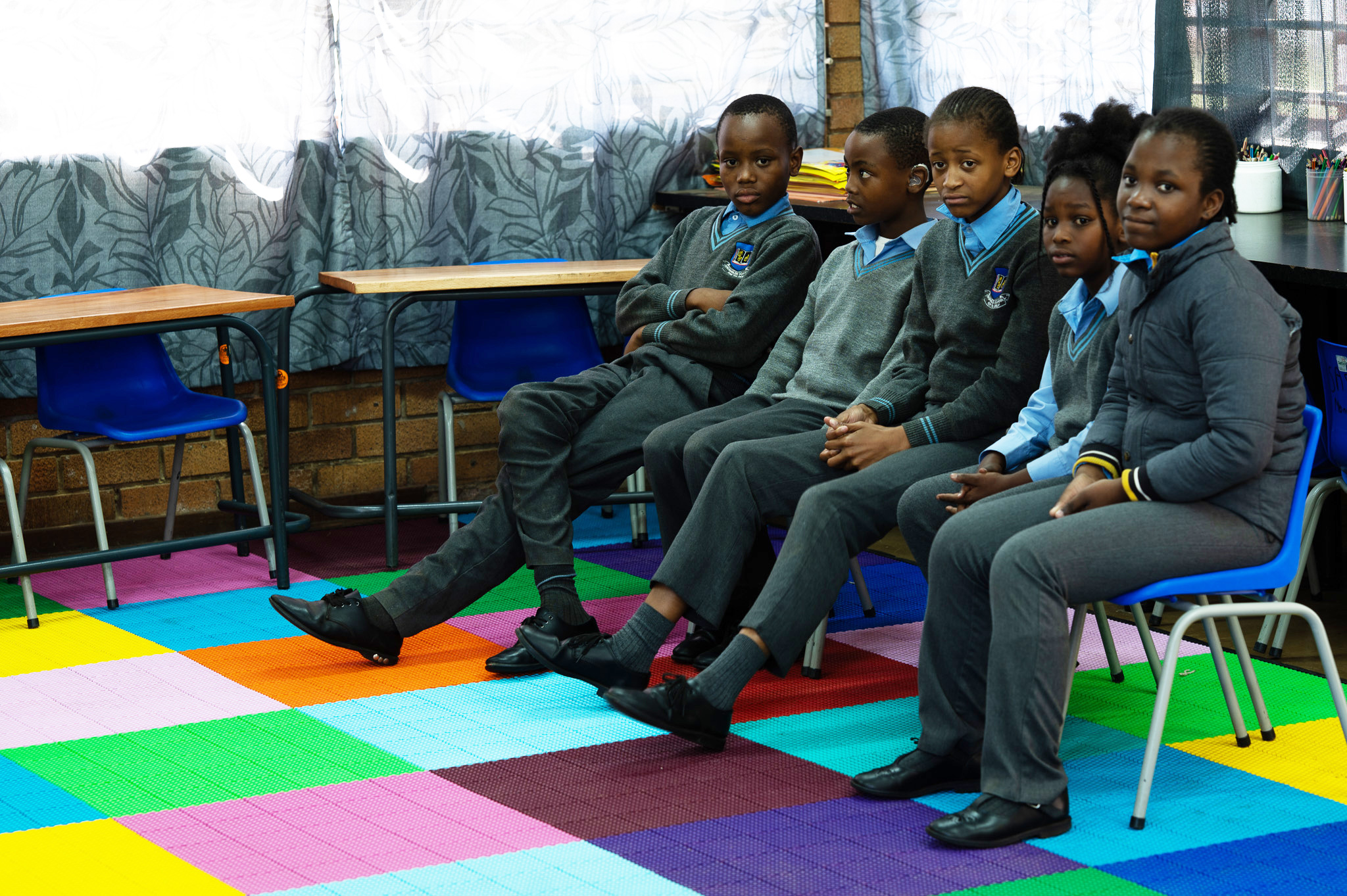
Here, children from various communities find a space where they can learn, grow, and simply live as they should: freely and fully. Classes begin at 8 am, with age-specific learning schedules tailored to each student’s needs.
“My students start learning the basics of literacy through South African Sign Language in the first year,” explains teacher Nonhlanhla Nyovane, as she shows us her classroom. “We place a strong emphasis on literacy because it builds the foundation for all future learning.”
Ekurhuleni is more than a school, it’s a home for many students who board on the premises during the week, ensuring they have access to not only education, but also daily meals and safe housing.
“We don’t segregate for any reason,” adds the Mr. Motsamai Mabuya. “Every child is welcome, regardless of their economic background.”
The school operates primarily through donations from various partners, but its long-term goal is financial self-reliance. That’s where ForAfrika’s school garden comes in, a creative solution to strengthen food security and self-reliance.
In the heart of the school, a vibrant vegetable garden now grows where there was once only bare ground. Covering nearly 1,250 square metres and managed by the Deputy Principal and a small team of teachers and officers, its first planting season yielded spinach, carrots, and cabbage.
“We started this garden with ForAfrika’s support,” shares the Deputy Principal. “They came with seeds, tools, and guidance, and we learned by doing. The success of the first harvest was beyond what we expected, it’s made a huge difference for our kitchen.”
Today, over 223 benefit from the fresh vegetables grown on-site. Plans are underway to expand the garden, quadrupling production and allowing the school to generate income from the sale of surplus crops.
Back in the classroom, teacher Nonhlanhla’s face lights up as she interacts with her students. Her connection to Ekurhuleni runs deep. Her mother worked here for many years, and teacher Nonhlanhla herself began as a cleaner before studying to become a teacher and department head.
“Knowing sign language is revolutionary for these children,” she says. “It gives them the power to communicate and belong. But we also dream of teaching their parents since many children go home and can’t communicate with their families, which breaks my heart.”
Expanding the school’s garden and boosting its self-sufficiency is a powerful step toward fostering communication, inclusion for persons with disability, and dignity.
At Ekurhuleni School, children are not defined by their disabilities, but by their potential. With continued support, we can ensure that they have the opportunity to belong and live their lives fully.



 Read more +09 September 2026 By ForAfrika in Central African Republic, Water, Sanitation and Hygiene (WASH)
 Read more +03 September 2026 By ForAfrika in South Sudan
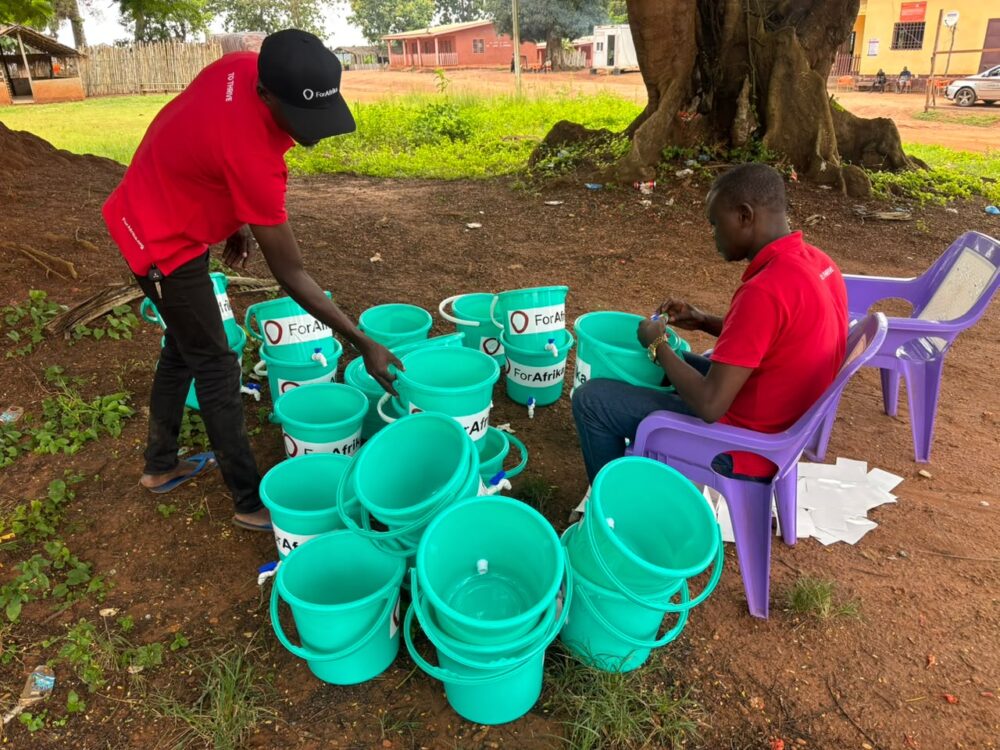 Read more +11 August 2026 By ForAfrika in Central African Republic, Emergency Response
| Cookie | Duration | Description |
|---|---|---|
| cookielawinfo-checkbox-analytics | 11 months | This cookie is set by GDPR Cookie Consent plugin. The cookie is used to store the user consent for the cookies in the category "Analytics". |
| cookielawinfo-checkbox-functional | 11 months | The cookie is set by GDPR cookie consent to record the user consent for the cookies in the category "Functional". |
| cookielawinfo-checkbox-necessary | 11 months | This cookie is set by GDPR Cookie Consent plugin. The cookies is used to store the user consent for the cookies in the category "Necessary". |
| cookielawinfo-checkbox-others | 11 months | This cookie is set by GDPR Cookie Consent plugin. The cookie is used to store the user consent for the cookies in the category "Other. |
| cookielawinfo-checkbox-performance | 11 months | This cookie is set by GDPR Cookie Consent plugin. The cookie is used to store the user consent for the cookies in the category "Performance". |
| viewed_cookie_policy | 11 months | The cookie is set by the GDPR Cookie Consent plugin and is used to store whether or not user has consented to the use of cookies. It does not store any personal data. |