The Boma Community-Led Total Sanitation (CLTS) Project, implemented by ForAfrika South Sudan in...

Africa has the resources to thrive. We partner with communities to unlock that abundance.
Through six integrated pillars — Emergency Response, Water, Sanitation and Hygiene, Food Security and Livelihoods, Health and Nutrition, Education, and Economic Empowerment — we partner with African communities from crisis through recovery, strengthening resilience so they can withstand future shocks and ultimately reach self-sufficiency.
We work through what we call a dynamic development continuum — a model that meets communities where they are at, often in times of crisis, and walks alongside them at every stage of their journey to self-sufficiency and ultimately thriving. Phase one of this continuum is our Humanitarian & Development work: the goal being self-sufficient communities.
First, we respond rapidly in emergencies to save lives and alleviate suffering. In times of crisis, whether drought, human conflict or displacement, we provide food, clean water, shelter, and medical care to those who need it most. Our emergency work is more than a short-term fix — it’s the first step in a longer journey.
Second, we help communities recover from the shock and build back better. For example, in Mozambique, after a cyclone flattened homes, we worked with local teams to rebuild safer housing, restore water systems, and restart farming activities.
Third, we focus on Transformational Development. This is where long-term resilience takes root, where communities meet their own needs and can withstand future shocks. This includes everything from training teachers and health care workers to helping farmers adopt weather resilient techniques that protect their yields from drought to establishing savings groups that give people the financial cushion to survive a crisis without falling back into poverty.
We offer vital support and resources to our communities when they need us most.
We work with communities to provide access to clean water and better hygiene.
We help create food security and more sustainable livelihoods for our people.
We provide health and nutritional support for healthier, stronger communities.
We equip our communities with the right skills and access to grow Africa’s economy.
In Angola, we met Cipriana — a successful farmer, until the worst drought in 60 years destroyed her crops and livelihood, and claimed the lives of two of her children. Her youngest was severely malnourished when we met her. She told us, “In the evenings I bring my children inside early, so they don’t have to see the other children eating. Some days we have one meal, for the past three days nothing!”
People often say, “Don’t give a man a fish, teach him to fish.” But what happens when the river dries up?
We gave Cipriana food — the fish — to keep her and her family alive. Then we worked with her to rebuild her livelihood so she could once again provide for her family.
Her story reminds us that development isn’t always a straight line. Communities may reach self-sufficiency, but disasters can strike again — and because we stay connected through the continuum, we can step in quickly and help them build back better than before, developing resilience against future shocks.
We facilitate a continuum of transformation involving three stages: Emergency Relief, Early Recovery and Transition, and Transformational Development. At each stage, we implement locally led, integrated interventions that are carefully organised and layered within and across our core programming pillars, to holistically address community development challenges.
As an African organisation, we possess an inherent understanding of the continent’s diverse contexts, cultures, and challenges. This deep-rooted familiarity allows us to tailor our interventions effectively, ensuring they resonate with local needs and aspirations.
ForAfrika has the largest footprint of any African Humanitarian and Development Organisation, with over 40 years of active engagement across the continent.
We are deeply ingrained within the communities we serve, earning their trust through decades of dedicated service, expertise, and respectful partnership.
Our track record of competence, respect for human rights, and diligent collaboration with local communities has established ForAfrika as a trusted and credible entity in the region.
We are always ready for quick deployment and effective response to humanitarian crises, leveraging
our presence within communities to save lives and alleviate suffering promptly.
From life-saving interventions like WASH facilities and emergency provisions to long-term recovery efforts, ForAfrika remains committed to supporting communities throughout every stage of development, tapping into local resources and skills for sustainable impact.

The Boma Community-Led Total Sanitation (CLTS) Project, implemented by ForAfrika South Sudan in...

ForAfrika presents a vision to transform the traditional systems through digital innovation. Ou...

Across Africa, there is a pressing and vital need for communities to move beyond mere self-sust...

Measuring impact is a crucial aspect of ForAfrika’s programmes, as it allows the organisation t...

This Knowledge, Attitude, and Practice (KAP) survey was conducted in Pibor County, Greater Pibo...
6,309,254 people reached across our programme activities in 2025
3,778,864 people reached
1,275,307 people reached
2,110,180 people reached
1,833,875 people reached
1,036,821 people reached
53,071 people reached
Across our six core programming pillars, developed through tried-and-tested processes, we address a myriad of interconnected community vulnerabilities.
Our interventions directly contribute to SDGs: 1, 2, 3, 4, 5, 6, 8, 10 and 13.
Click on a SDG for more information:
We operate in Angola, Central African Republic, Ethiopia, Mozambique, Rwanda, South Africa, South Sudan and Uganda.
Click on a country for more information:
Through a successful partnership, we’ve provided highly nutritious meals to children and families in Angola, Mozambique, and South Sudan, becoming a trusted implementing partner.
Partnering since 2020, we continue to deliver lifesaving Health and WASH projects in South Sudan and Mozambique in response to the Covid-19 crisis.
Since the 1980s, our partnership has served millions of Africans with life-saving food and essential provisions.
Actively participating in emergency coordination, we have a longstanding partnership via the South Sudan Humanitarian Fund (SSHF) and the UN Cluster system.
We’ve significantly contributed to refugee integration in Uganda since 2017 and are aiding in the 2023 Sudan Crisis response in South Sudan.
Our partnership with UNICEF in Mozambique, South Sudan and Angola has delivered years of lifesaving and high impact interventions across multiple sectors including Health, Nutrition, WASH and Education.
Running the Pibor Primary Healthcare Clinic in South Sudan since 2022, we’ve upgraded it to hospital status in 2023, achieving zero maternal deaths in 2024.
As a partner since 2003, we’ve assisted in various programmes and managed warehouses and food distribution, eventually becoming the largest implementing partner in South Sudan in 2011.
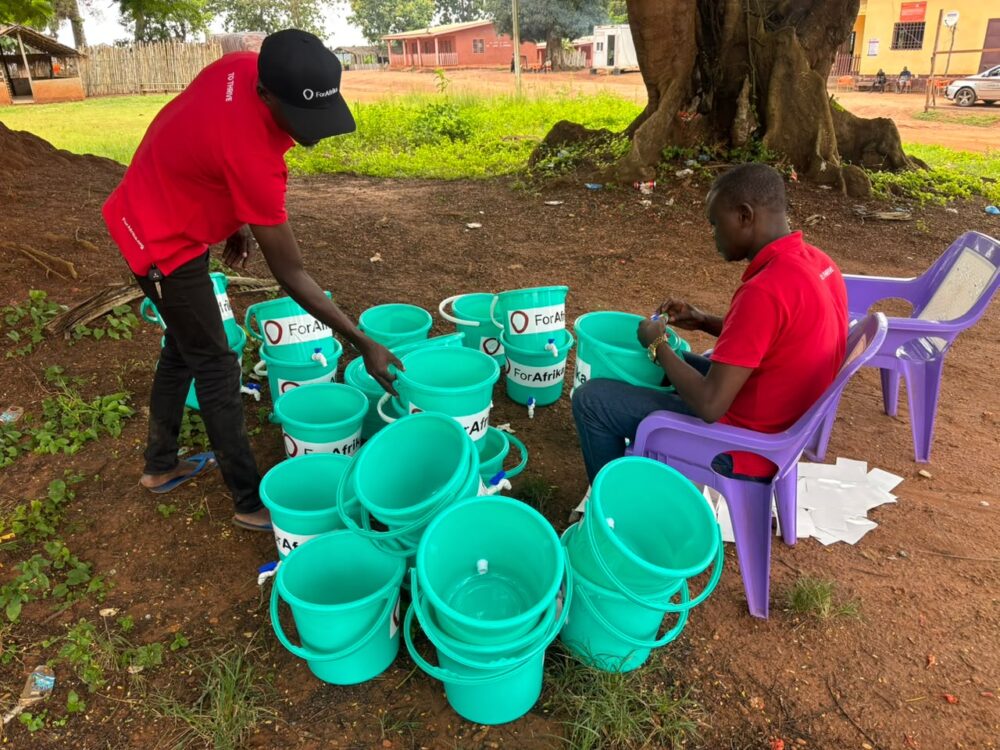 Read more +11 August 2026 By ForAfrika in Central African Republic, Emergency Response
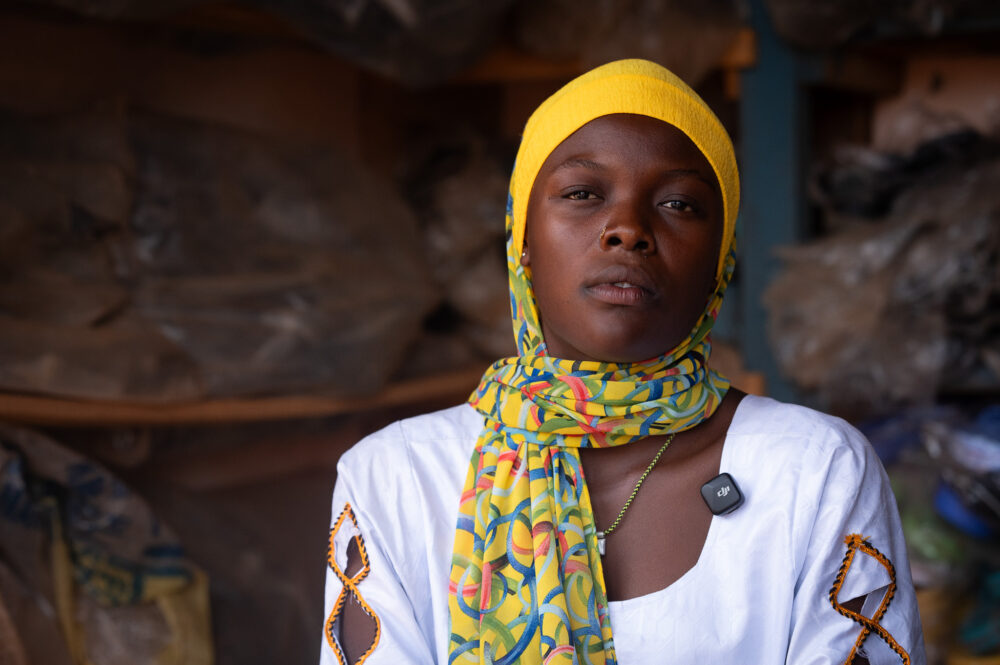 Read more +10 August 2026 By ForAfrika in Central African Republic, Economic Empowerment
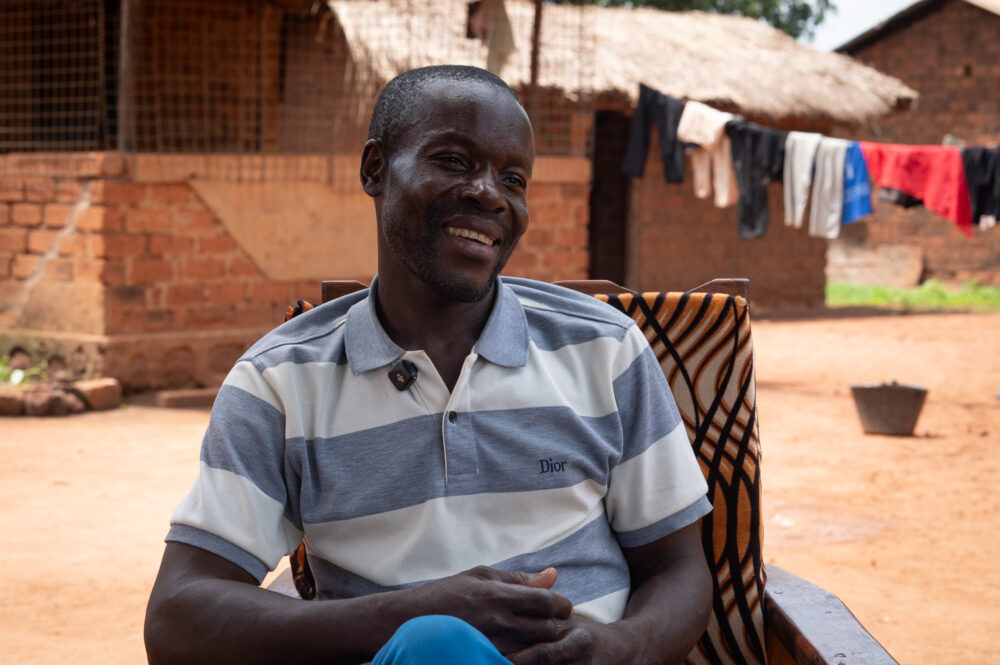 Read more +21 July 2026 By ForAfrika in Central African Republic, Economic Empowerment, Food Security and Livelihoods
| Cookie | Duration | Description |
|---|---|---|
| cookielawinfo-checkbox-analytics | 11 months | This cookie is set by GDPR Cookie Consent plugin. The cookie is used to store the user consent for the cookies in the category "Analytics". |
| cookielawinfo-checkbox-functional | 11 months | The cookie is set by GDPR cookie consent to record the user consent for the cookies in the category "Functional". |
| cookielawinfo-checkbox-necessary | 11 months | This cookie is set by GDPR Cookie Consent plugin. The cookies is used to store the user consent for the cookies in the category "Necessary". |
| cookielawinfo-checkbox-others | 11 months | This cookie is set by GDPR Cookie Consent plugin. The cookie is used to store the user consent for the cookies in the category "Other. |
| cookielawinfo-checkbox-performance | 11 months | This cookie is set by GDPR Cookie Consent plugin. The cookie is used to store the user consent for the cookies in the category "Performance". |
| viewed_cookie_policy | 11 months | The cookie is set by the GDPR Cookie Consent plugin and is used to store whether or not user has consented to the use of cookies. It does not store any personal data. |