A daily meal that keeps children in school
Monday, 22 June 2026
At St. Bakhita Primary School in Northern Bahr el Ghazal State, South Sudan, the impact of the Home Grown School Feeding Programme can be seen in fuller classrooms, more attentive pupils, and children who now look forward to coming to school.
- Published in Food Security and Livelihoods, Health and Nutrition, South Sudan

A garden that brought learners back to class
Friday, 05 June 2026
Pupils at St. Joseph Primary School, recently tasted the fruits of their hard work when they harvested cassava they had planted, weeded and cared for themselves. The cassava was served alongside food supplied through ForArika’s School Feeding Programme funded by World Food Programme.
- Published in Education, Food Security and Livelihoods, Health and Nutrition, South Sudan

Nourishing bodies and local economies
Tuesday, 21 April 2026
In Kuajok, South Sudan, a simple plate is drawing children into classrooms, keeping them there, and giving them a better chance to learn and grow. Thanks to the Home-Grown School Feeding Initiative, fresh vegetables grown by local smallholder farmers are now reaching nine primary schools, turning school meals into a source of nutrition.
- Published in Food Security and Livelihoods, South Sudan

Laurinda Muhombo, the little Dream seller of Issombo
Friday, 13 March 2026
In the quiet rural community of Issombo, in the Municipality of Bocoio, Angola, 12-year-old Laurinda Muhombo is enrolled in the third grade at Issombo Primary School and is a beneficiary of the school feeding programme supported by ForAfrika. Despite her young age, Laurinda has long had to navigate the tension between survival and her right to simply be a child.
- Published in Angola, Education, Food Security and Livelihoods

Sowing seeds of resilience by rebuilding refugee livelihoods
Thursday, 05 March 2026
In South Sudan’s Pibor, years of conflict and displacement have disrupted livelihoods, leaving many families with limited and unreliable ways to earn an income. At the same time, prolonged dry spells and unpredictable weather patterns make it harder to produce food, especially where quality seeds, basic tools, and dependable water sources are scarce.
- Published in Food Security and Livelihoods, South Sudan

Smart Centre knowledge transfer to smallholder farmers in Koboko District
Monday, 02 March 2026
The Smart Centre is a ForAfrika initiative designed to boost food security and improve livelihoods in Koboko District and West Nile region, a vital area for both refugees and host communities.
- Published in Economic Empowerment, Food Security and Livelihoods, Uganda

Collective community effort improves watershed and boosts livelihoods
Thursday, 26 February 2026
In recent years, environmental challenges have become a major concern in Konso, situated in southwestern region of Ethiopia’s Southern Nations. The area faces numerous barriers including land degradation, soil erosion, deforestation, desertification, loss of biodiversity, and recurrent droughts, all of which contribute to reduced productivity and ongoing food shortages.

ForAfrika accelerates livelihood diversification in Terego District
Tuesday, 10 February 2026
56-year-old farmer, Alex Odrijia, from Uganda’s Kubala area in Terego District, had been trapped in tobacco growing for 20 years.
- Published in Economic Empowerment, Food Security and Livelihoods, Uganda
Ashawa’s journey from struggle to success in Fasha
Tuesday, 10 February 2026
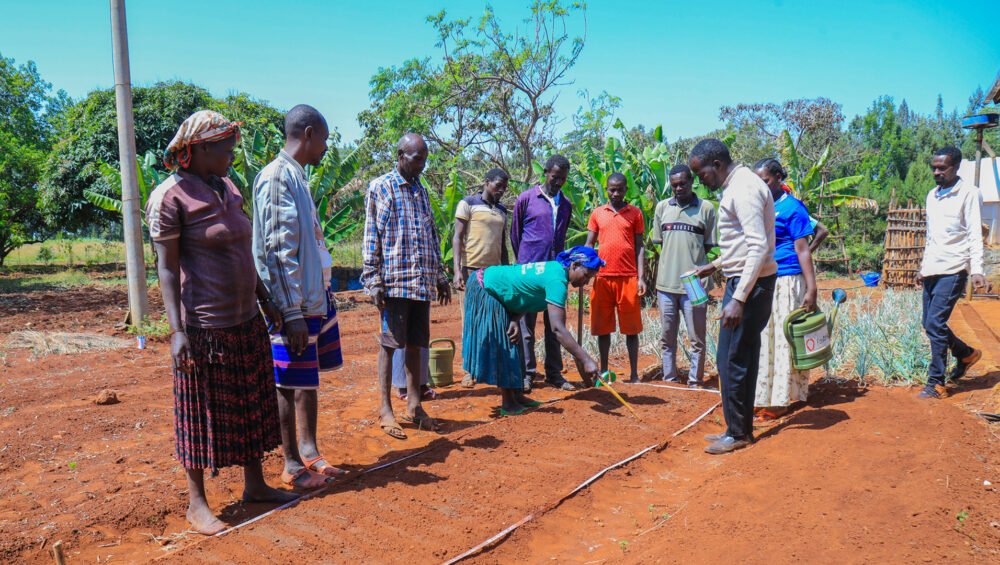
Ashawa Oribula, a married mother of seven, has spent much of her life facing adversity. Her home is nestled on the extremely rocky slopes of Fasha highlands, Konso Zone, and her family was dependent on erratic rainfall for their garden to grow food, often yielding barely enough to eat, let alone sell.
- Published in Ethiopia, Food Security and Livelihoods

Breaking barriers, building futures: How women in Rwanda are redefining traditional roles and rebuilding their lives
Monday, 24 November 2025
In many rural communities across Rwanda, traditional gender roles have long shaped expectations around who earns, who leads, and who provides.
- Published in Food Security and Livelihoods, Rwanda