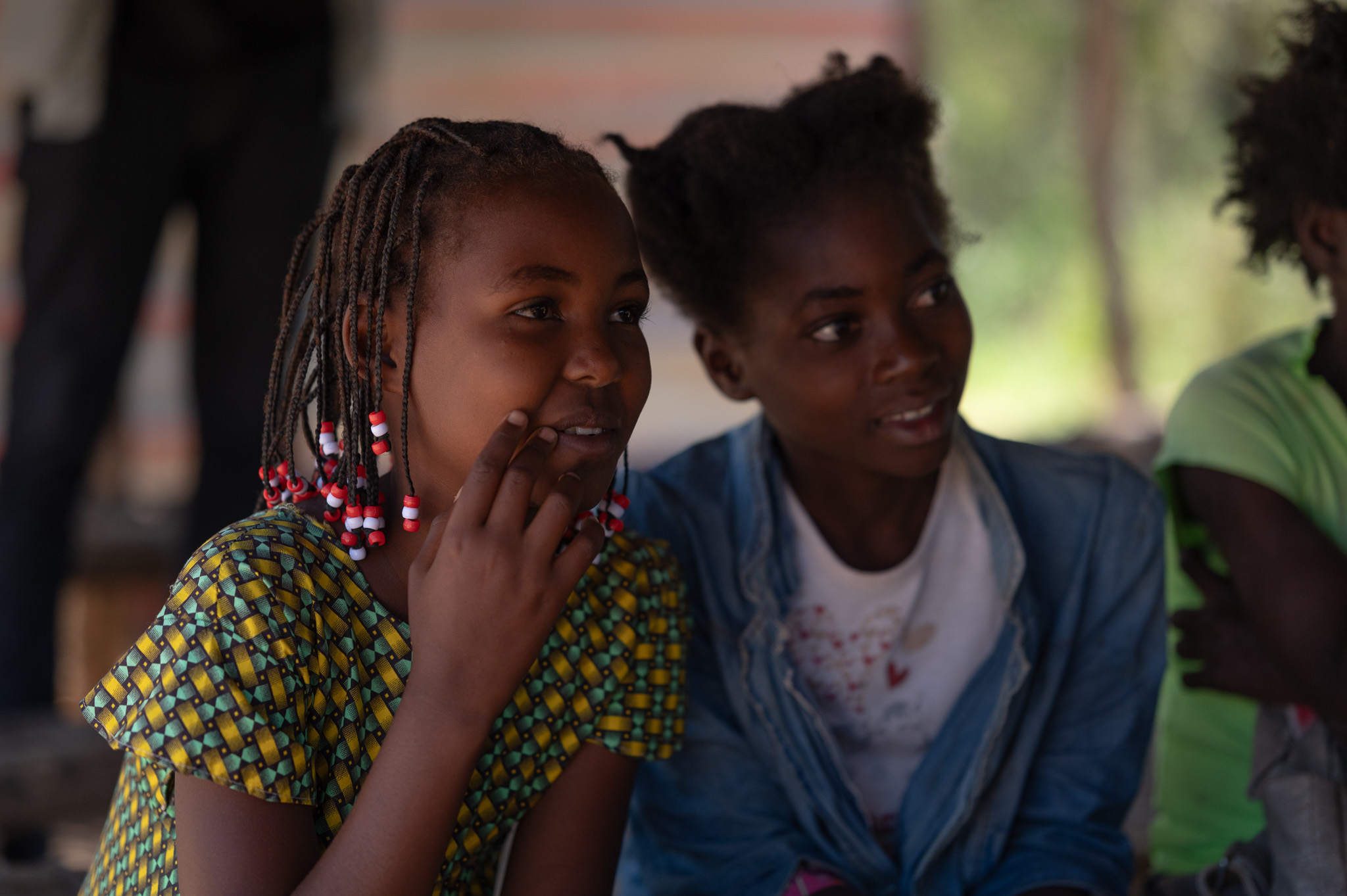
School learners attend the sensitisation workshop.
“Hello everyone. I’m here today to talk to you about something that happens to me, to you, and to every woman and girl: growing up.”
Across the world, menstruation remains a taboo. Misconceptions linking periods to “impurity” or illness persist, eroding the dignity and wellbeing of women and girls. Adding another layer to this already complex issue is period poverty: the inability to afford menstrual products, a reality faced by millions of girls and women in developing regions such as central Angola.
Here, limited knowledge about menstruation, combined with stigma and the lack of affordable menstrual products, continues to push many girls out of school. Some feel too embarrassed to attend classes when their period starts; others receive little or no guidance at home and fear being mocked or isolated at school.
“Some girls are giving up school because they are ashamed when they menstruate,” explains one of the school-feeding programme cooks. “Many do not know what to expect when their period comes, so they stay home and fall behind.”
“We have seen cases of early pregnancies increase,” says Daniel Chimbungo, a teacher at the school. “When girls drop out because of menstruation, they start believing their role is to stay at home. Soon after, many become pregnant. We need to stop this.”
This is where Ermelinda’s workshops truly make a difference. After creating a safe and respectful space for conversation, she demonstrates how to use menstrual pads correctly, how long they should be worn, and how to clean or prepare reusable alternatives when needed. She also teaches safe disposal methods, an important Water, Sanitation and Hygiene (WASH) practice to prevent waste accumulation and avoid health risks.
The girls listen attentively, ask candid questions, and, perhaps for the first time, feel reassured that their bodies are normal, healthy, and deserve respect. Some ask about pregnancy, others about bodily changes. Ermelinda responds with patience and clarity, reinforcing that knowledge protects both health and future opportunities.
A few kilometres away, at Kalupuca Primary School, where 350 students aged 6 to 18 attend classes, Ermelinda begins another workshop. Again, over 50 girls gather, including some who are already pregnant.
“We often advise girls and teenagers about early pregnancy, but these talks truly help us avoid further cases. In today’s class, we have three pregnant teenagers, and when you heard their questions about how to prevent pregnancy, you could see how important these workshops are,” says Joana Gervis, the school’s director.

Ermelinda Duva, ForAfrika’s Community Engagement Officer during a sensitation workshop at Viendi Primary School, Angola
Last month, ForAfrika distributed nearly 200 hygiene kits in Viendi and neighbouring communities. Each kit includes menstrual pads, soap, toothpaste, and a toothbrush, supporting both menstrual hygiene management and overall wellbeing. This initiative strengthens the broader WASH work in the area, ensuring girls can attend school safely, comfortably, and with confidence.
With each session, Viendi moves a little closer to breaking the silence around menstruation. For the girls gathered in these small classrooms, this is more than a workshop, it is a moment of dignity, empowerment, and reassurance. Their future does not pause when their period begins.
Menstruation is a healthy part of every woman’s life, and it should never be a barrier for girls and teenagers to learn, grow, and thrive.