Africa has the resources to thrive. We partner with communities to unlock that abundance.
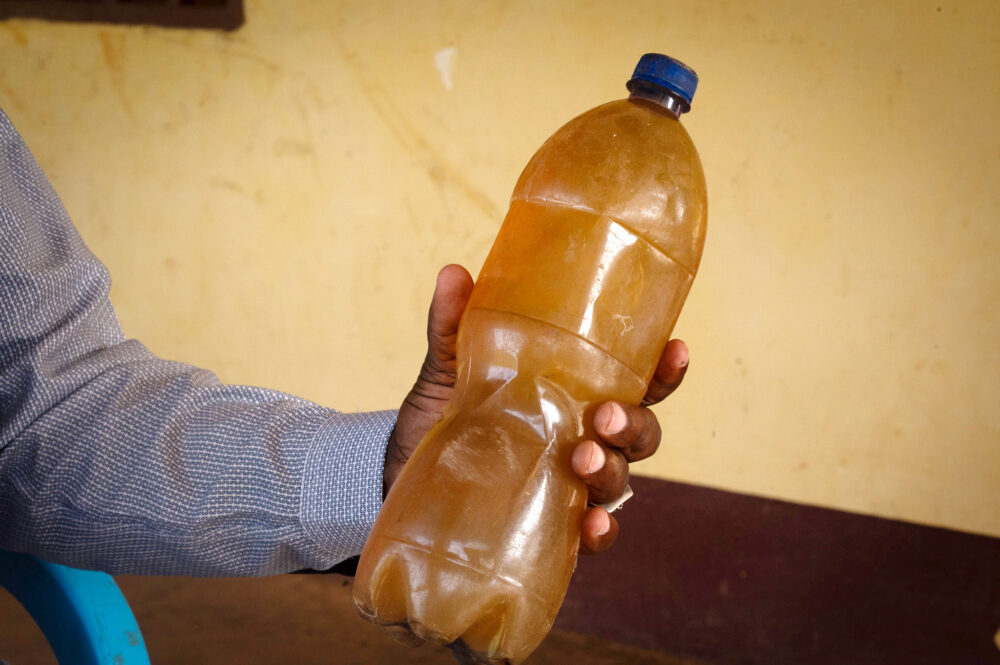
The water was available, but it was not safe. It exposed children to waterborne diseases and made basic hygiene difficult to maintain. Children frequently suffered from illnesses such as diarrhoea and dysentery. The cooks, many of them mothers supporting the school feeding programme, struggled to clean pots, plates and utensils properly. Preparing meals required additional effort, as they often had to walk long distances to fetch water. The lack of safe and reliable water affected health, learning and nutrition outcomes of the school community.
In 2026, that story began to change. Through a joint United Nations project supported by the European Union, and implemented by ForAfrika and the World Food Programme (WFP,0 Agok Primary School received a solarised water pump. The intervention has provided the school with reliable access to clean water, improving daily life for learners, teachers and the wider school community.
- Heyrina Athieng Manyang, the Head Girl at Agok Primary School.
Since the installation of the solarised water pump, the school reports that no child has fallen sick from waterborne diseases linked to unsafe water. This marks a significant improvement for a school where sickness had previously been routine.
The availability of safe water has also supported education outcomes. According to Abiem Madeng, the School Administrator, enrolment has increased from 213 learners in 2025 year to 523 learners in 2026, representing an increase of more than 145%. This shows how access to basic services such as clean water can influence school attendance, retention and community confidence in education.
Beyond supplying drinking water, the pump is also supporting nutrition and practical learning. The school now uses the water to irrigate a school garden, which contributes to improved nutrition while helping learners gain hands-on agricultural knowledge. At the same time, the burden on school cooks has been reduced, allowing them to spend more time preparing meals and supporting children rather than walking long distances to collect water.
For Agok Primary School, one solarised water pump has improved health, strengthened school feeding and nutrition, supported enrolment, reduced the daily workload for women, and created new opportunities for learning through the school garden.
This intervention demonstrates how targeted investments can deliver benefits across multiple sectors. With the support of the European Union, ForAfrika and WFP, Agok Primary School is a vivid example of how clean water can unlock better health, stronger education outcomes, improved nutrition and greater dignity for an entire school community.
 Read more +09 September 2026 By ForAfrika in Central African Republic, Water, Sanitation and Hygiene (WASH)
 Read more +03 September 2026 By ForAfrika in South Sudan
 Read more +11 August 2026 By ForAfrika in Central African Republic, Emergency Response
| Cookie | Duration | Description |
|---|---|---|
| cookielawinfo-checkbox-analytics | 11 months | This cookie is set by GDPR Cookie Consent plugin. The cookie is used to store the user consent for the cookies in the category "Analytics". |
| cookielawinfo-checkbox-functional | 11 months | The cookie is set by GDPR cookie consent to record the user consent for the cookies in the category "Functional". |
| cookielawinfo-checkbox-necessary | 11 months | This cookie is set by GDPR Cookie Consent plugin. The cookies is used to store the user consent for the cookies in the category "Necessary". |
| cookielawinfo-checkbox-others | 11 months | This cookie is set by GDPR Cookie Consent plugin. The cookie is used to store the user consent for the cookies in the category "Other. |
| cookielawinfo-checkbox-performance | 11 months | This cookie is set by GDPR Cookie Consent plugin. The cookie is used to store the user consent for the cookies in the category "Performance". |
| viewed_cookie_policy | 11 months | The cookie is set by the GDPR Cookie Consent plugin and is used to store whether or not user has consented to the use of cookies. It does not store any personal data. |