Catalytic transformation for Africa to thrive
Our vision is for Africa to thrive
The group consists of 30 young people, 18 women and 12 men including community members who were integrated into a structure originally formed by the host community. While this arrangement gave them access to land for cultivation at a time when land access was a major barrier, its greatest value was the sense of acceptance and belonging in the community. In a context where displacement often leaves people feeling excluded, this collaboration created space for both livelihoods and peaceful coexistence to grow side by side.
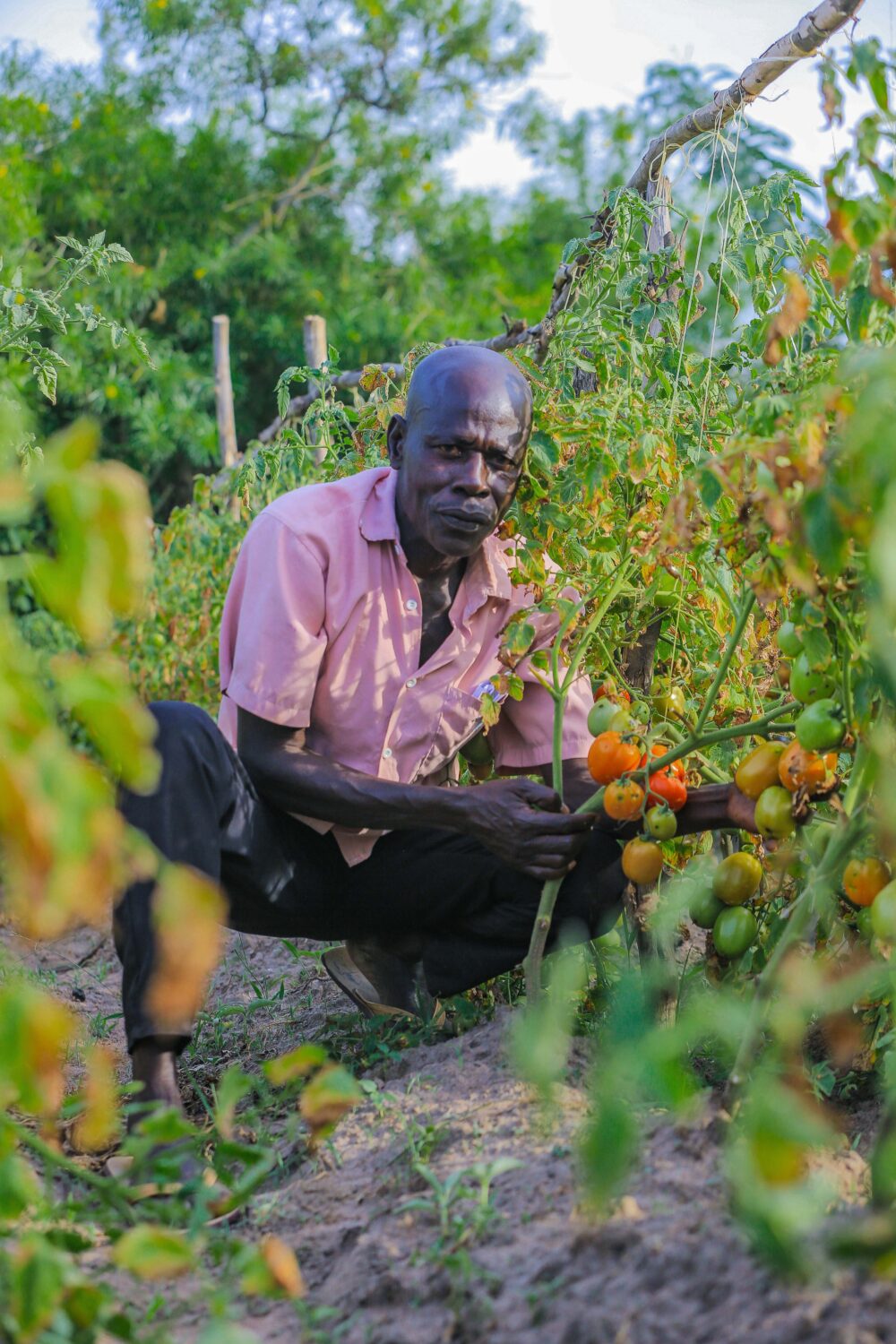
Before ForAfrika’s support, the group tried to make a living by growing tomatoes and cabbages. But despite their hard work, they faced repeated setbacks. They lacked reliable access to quality seed, had limited technical knowledge, and often selected crops without enough information about profitability or market demand. As a result, they worked hard, but the returns were often disappointing.
- Tiondi Isaac, the group Chairperson.
That changed when the group was identified by ForAfrika’s Agricultural and Market Support project, funded by the World Food Programme. ForAfrika offered the group practical training in enterprise selection, agronomic practices, market planning, and input sourcing. This support helped them to start making more informed decisions about what to grow and how to grow it.
With this new knowledge, the group invested in onion production and ForAfrika further linked to agro-input dealers through which they accessed bombe red onion seed, a variety known for high productivity and strong market demand. That decision is bearing fruit. The group has one acre of onions now at harvest stage, with projected earnings of at least UGX 20 million (approximately USD 540). The income will be shared equally among all 30 members, refugees and host community alike.
Giant Farmers Group’s story is evidence that inclusive agriculture can strengthen both livelihoods and social cohesion in refugee-hosting areas.
Moving forward, the group is planning to buy more than three acres of land near a water source to facilitate irrigation so that they can produce both in season and off season.
“We have plans to expand our production. The group now has the capacity to manage a bigger onion garden,” Tiondi said.
- Tiondi Isaac
 Read more +02 October 2026 By ForAfrika in Uganda
 Read more +02 October 2026 By ForAfrika in Rwanda
 Read more +29 September 2026 By ForAfrika in Central African Republic, Food Security and Livelihoods
| Cookie | Duration | Description |
|---|---|---|
| cookielawinfo-checkbox-analytics | 11 months | This cookie is set by GDPR Cookie Consent plugin. The cookie is used to store the user consent for the cookies in the category "Analytics". |
| cookielawinfo-checkbox-functional | 11 months | The cookie is set by GDPR cookie consent to record the user consent for the cookies in the category "Functional". |
| cookielawinfo-checkbox-necessary | 11 months | This cookie is set by GDPR Cookie Consent plugin. The cookies is used to store the user consent for the cookies in the category "Necessary". |
| cookielawinfo-checkbox-others | 11 months | This cookie is set by GDPR Cookie Consent plugin. The cookie is used to store the user consent for the cookies in the category "Other. |
| cookielawinfo-checkbox-performance | 11 months | This cookie is set by GDPR Cookie Consent plugin. The cookie is used to store the user consent for the cookies in the category "Performance". |
| viewed_cookie_policy | 11 months | The cookie is set by the GDPR Cookie Consent plugin and is used to store whether or not user has consented to the use of cookies. It does not store any personal data. |